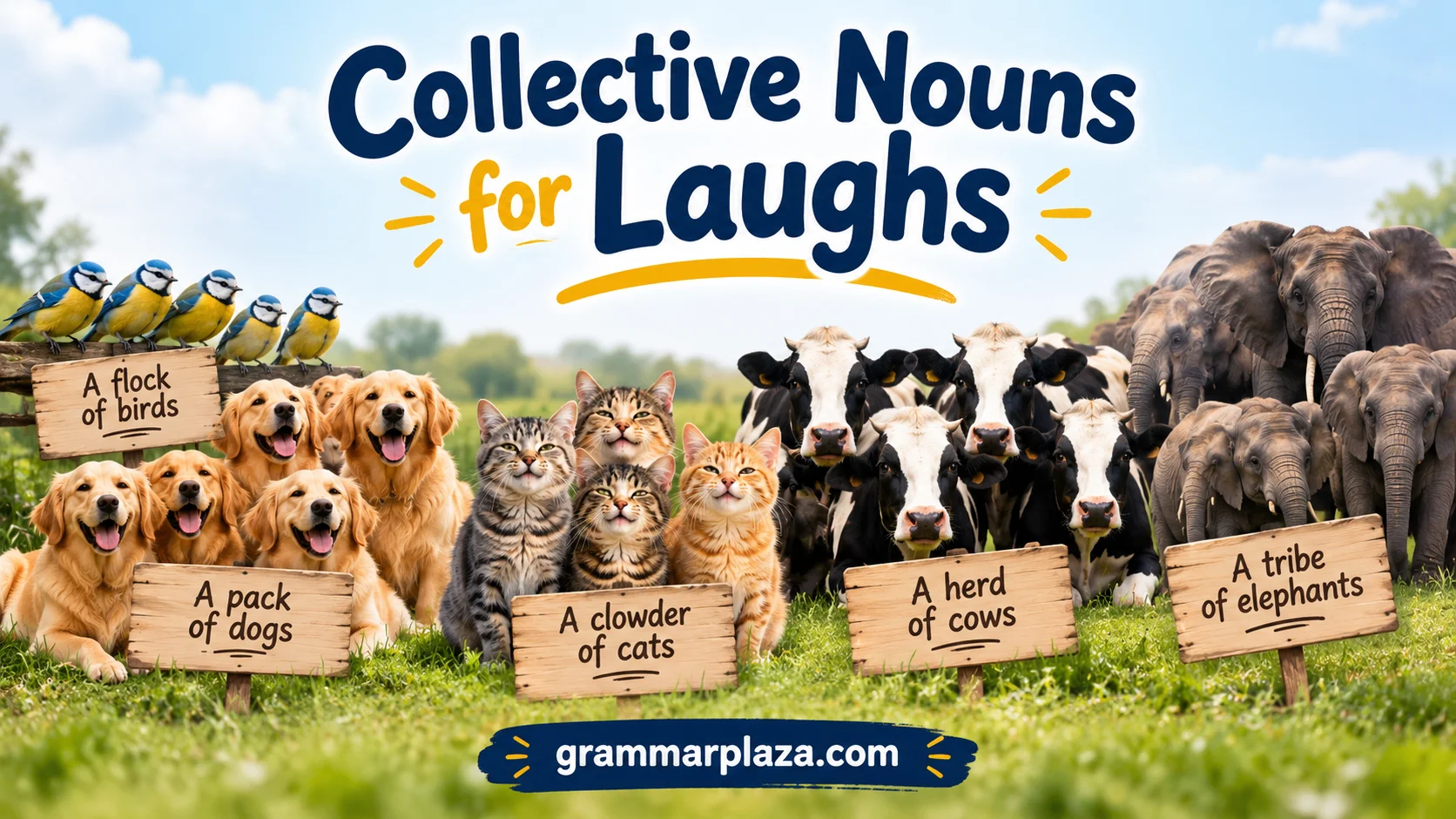
Collective Nouns for Laughs help make English more natural and expressive when several people laugh together during a joyful or funny moment. Although there is no single universally accepted collective noun, different phrases can describe shared laughter based on the situation. Choosing the right expression helps writers and speakers clearly show the mood, sound, and intensity of laughter.
Common expressions include a burst of laughter, a round of laughter, a fit of laughter, peals of laughter, and a chorus of laughter. Each phrase has a slightly different meaning and creates a vivid picture. These expressions are useful in conversations, storytelling, articles, and creative writing because they make descriptions more lively and enjoyable. They can show whether laughter is sudden, loud, shared, repeated, or sustained.
Common Collective Nouns for Laughs
| Collective Noun | Simple Example |
| Chorus of Laughs | A chorus of laughs filled the theater. |
| Burst of Laughs | A burst of laughs followed the joke. |
| Round of Laughs | A round of laughs echoed through the room. |
| Ripple of Laughs | A ripple of laughs spread across the audience. |
| Wave of Laughs | A wave of laughs swept through the crowd. |
A Chorus of Laughs
A chorus of laughs describes many people laughing together, creating a harmonious and joyful sound.
Examples
- A chorus of laughs greeted the comedian.
- The funny movie caused a chorus of laughs.
- We heard a chorus of laughs from the classroom.
- A chorus of laughs echoed across the park.
- The children shared a chorus of laughs.
- The audience erupted into a chorus of laughs.
- A chorus of laughs filled the family dinner.
- The joke inspired a chorus of laughs.
- Everyone joined in a chorus of laughs.
- The party ended with a chorus of laughs.
A Burst of Laughs
A burst of laughs refers to a sudden, short period of laughter after something funny happens.
Examples
- A burst of laughs followed his funny story.
- The magician caused a burst of laughs.
- We heard a burst of laughs outside.
- Her joke created a burst of laughs.
- The class erupted in a burst of laughs.
- A burst of laughs came from the audience.
- The children shared a burst of laughs.
- His silly dance caused a burst of laughs.
- A burst of laughs filled the room.
- The surprise ending brought a burst of laughs.
A Round of Laughs
A round of laughs describes laughter shared by a group, often after a joke or humorous remark.
Examples
- A round of laughs followed the punchline.
- The speaker received a round of laughs.
- The classroom enjoyed a round of laughs.
- A round of laughs spread around the table.
- Everyone shared a round of laughs.
- The actor earned a round of laughs.
- The funny comment started a round of laughs.
- A round of laughs made the meeting cheerful.
- We enjoyed a round of laughs together.
- The audience gave a round of laughs.
A Ripple of Laughs
A ripple of laughs refers to laughter that spreads gradually from one person to another.
Examples
- A ripple of laughs moved through the crowd.
- The teacher noticed a ripple of laughs.
- His smile started a ripple of laughs.
- A ripple of laughs spread across the room.
- The funny mistake caused a ripple of laughs.
- We heard a ripple of laughs behind us.
- The audience shared a ripple of laughs.
- A ripple of laughs reached every corner.
- The joke created a ripple of laughs.
- Everyone joined the ripple of laughs.
A Wave of Laughs
A wave of laughs describes laughter that moves across a large group almost like a wave.
Examples
- A wave of laughs swept through the audience.
- The comedian started a wave of laughs.
- We heard a wave of laughs at the concert.
- A wave of laughs followed every joke.
- The children created a wave of laughs.
- The audience enjoyed a wave of laughs.
- A wave of laughs filled the stadium.
- The funny video caused a wave of laughs.
- Everyone joined the wave of laughs.
- The celebration ended with a wave of laughs.
Read This: Collective Nouns for Camels
Interesting Facts About Laughs
Laughs are much more than simple sounds of amusement—they are a remarkable part of human communication and social bonding. Humans have been laughing for millions of years, making laughter one of our oldest forms of emotional expression. Scientists believe laughter evolved long before spoken language and helped strengthen relationships within early human communities.
Physiologically, laughter is a complex process involving the brain, lungs, vocal cords, facial muscles, and diaphragm. A genuine laugh activates multiple areas of the brain and often releases endorphins, the body’s natural “feel-good” chemicals, which help reduce stress and improve mood. Unlike wildlife, laughs themselves do not have dietary habits; however, the ability to laugh is often influenced by overall health and well-being, which in turn is supported by good nutrition. People who maintain healthy lifestyles often experience better emotional resilience and social engagement, making laughter an important indicator of physical and mental wellness. Because laughter is contagious, hearing someone laugh can trigger laughter in others, strengthening friendships and creating positive social environments.
FAQs :
1. What is a collective noun for laughs?
There is no single official collective noun for laughs. Common expressions include a burst of laughter, a round of laughter, a chorus of laughter, and peals of laughter.
2. What is the most common expression for a group of laughs?
A burst of laughter is a common expression when laughter suddenly starts, especially after something funny happens.
3. Can I say “a chorus of laughter”?
Yes. A chorus of laughter is a natural expression for laughter coming from several people at the same time.
4. What does “a round of laughter” mean?
A round of laughter describes a shared period of laughter, usually caused by something amusing or entertaining.
5. What does “a fit of laughter” mean?
A fit of laughter refers to a strong or uncontrollable period of laughing that may continue for some time.
6. What are “peals of laughter”?
Peals of laughter describes loud, repeated, and lively sounds of laughter. It is often used in descriptive or creative writing.
7. Is “a group of laughs” grammatically correct?
It can be understood, but it is not a common or expressive phrase. More natural choices include a round of laughter or a chorus of laughter.
8. Which expression is best for storytelling?
The best expression depends on the scene. A burst of laughter works for sudden laughter, while a chorus of laughter works well when many people laugh together.
9. Are these collective nouns officially recognized?
Not all of these expressions are traditional collective nouns in the same way as terms such as “a pride of lions.” They are commonly used phrases that describe collective or shared laughter.
10. Why use different expressions for laughs?
Different expressions add detail and emotion to writing. They can show whether laughter is sudden, loud, repeated, intense, or shared among several people.
Conclusion :
There is no one universally accepted collective noun for laughs, but several useful expressions can describe laughter naturally. A burst of laughter, a round of laughter, a fit of laughter, peals of laughter, and a chorus of laughter each create a different image. Understanding these expressions helps you choose the right phrase for conversations, storytelling, articles, and creative writing. Using the appropriate term can make your English more clear, vivid, and expressive.












1 thought on “Collective Nouns for Laughs”