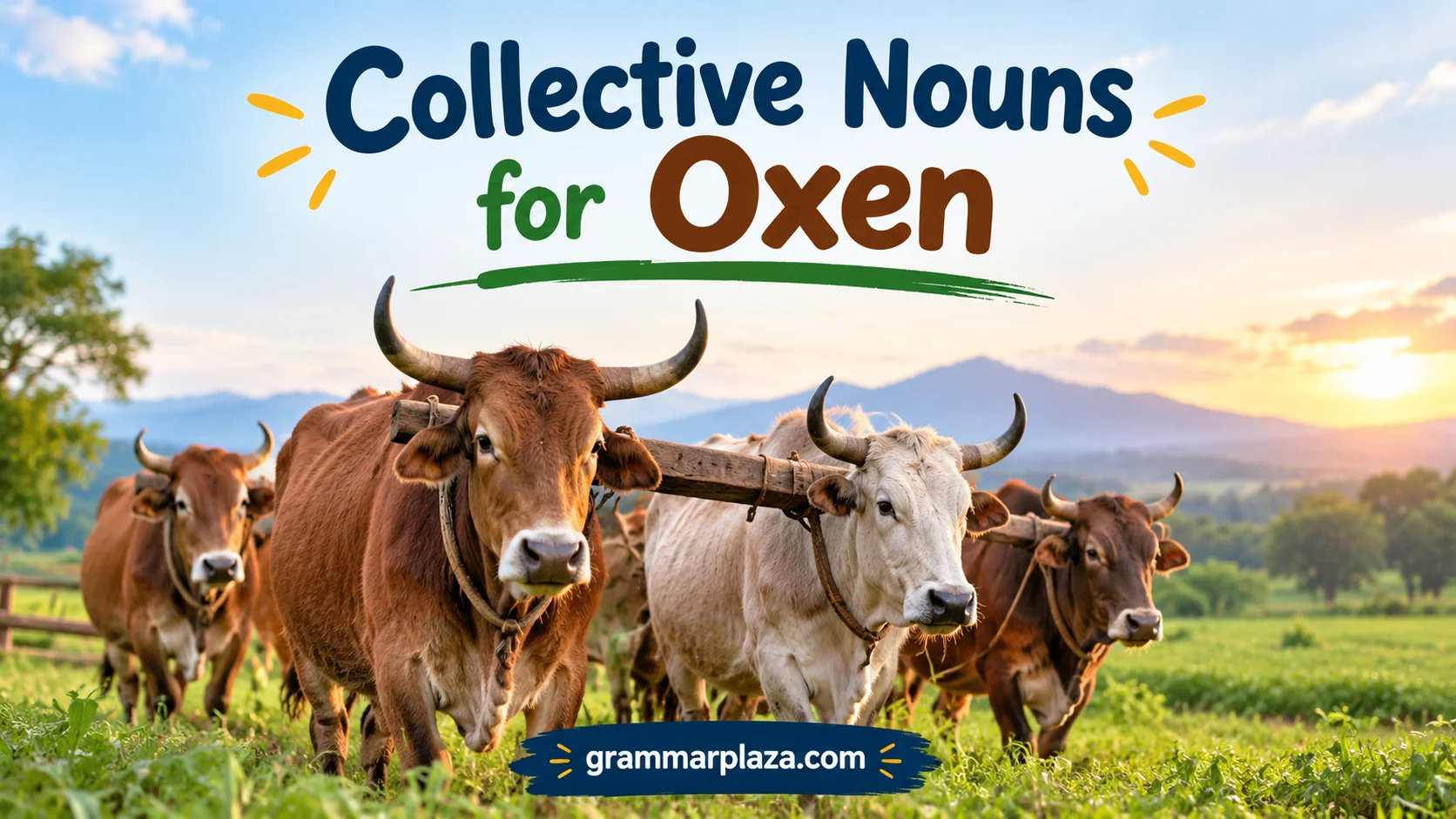
Collective nouns for oxen are special words in English used for naming a group of people, animals, or things as a single unit. Instead of naming each animal separately, we can describe a group of oxen using a herd of oxen, a common and familiar expression. These words make sentences shorter, clearer, and more expressive while helping improve grammar, vocabulary, and understanding of animal group names. Some animal collective nouns are unusual, and their history, including terms dating back to medieval hunting traditions, makes the English language more interesting.
Oxen are domesticated cattle trained to work together in farming, transportation, and other forms of heavy labor. Because they move and work in groups, collective nouns help describe their appearance, movement, and behavior. In this guide, readers discover useful terms, their meanings, and simple examples for using group names confidently in everyday conversations and writing. Learning these words also builds a better understanding of how oxen cooperate, interact, and contribute to human life.
Common Collective Nouns for Oxen
| Collective Noun Type | Simple Example |
| Team | A team of oxen pulled the cart. |
| Yoke | A yoke of oxen worked in the field. |
| Drove | A drove of oxen moved along the road. |
| Herd | A herd of oxen grazed in the pasture. |
| Span | A span of oxen carried a heavy load. |
Collective Nouns for Oxen with Example Sentences
1. Team of Oxen
A team of oxen refers to a group of oxen trained to work together, especially when pulling carts, plows, or other heavy equipment. This is one of the most common terms used when describing working oxen.
Examples:
- A team of oxen pulled the farmer’s wooden cart.
- The team of oxen worked together to plow the field.
- A strong team of oxen helped transport heavy materials.
- The farmer trained a team of oxen for farming work.
- A team of oxen moved slowly across the village road.
- The team of oxen completed the long journey safely.
- A team of oxen was used during the traditional farming festival.
- The farmer depended on his team of oxen every season.
- A team of oxen carried supplies to the nearby town.
- The villagers admired the hardworking team of oxen.
2. Yoke of Oxen
A yoke of oxen usually describes two oxen joined together by a wooden bar called a yoke. The term is strongly connected with traditional farming practices.
Examples:
- A yoke of oxen pulled the plow through the soil.
- The farmer guided a yoke of oxen across the field.
- A yoke of oxen helped prepare the land for planting.
- The old farmer owned a powerful yoke of oxen.
- A yoke of oxen moved steadily under the farmer’s direction.
- The yoke of oxen carried a heavy wooden cart.
- A yoke of oxen rested after a long day of work.
- The farmer cared for his yoke of oxen carefully.
- A yoke of oxen was seen near the village farm.
- The yoke of oxen showed great strength and patience.
3. Drove of Oxen
A drove of oxen describes a moving group of oxen, especially when they are being taken from one place to another.
Examples:
- A drove of oxen walked along the dusty path.
- The farmer watched a drove of oxen heading toward the pasture.
- A drove of oxen crossed the open countryside.
- The villagers saw a drove of oxen near the river.
- A drove of oxen traveled slowly toward the market.
- The farmer guided a drove of oxen through the valley.
- A drove of oxen rested beside the farm after traveling.
- The large drove of oxen attracted attention from visitors.
- A drove of oxen moved together in an organized way.
- The shepherd guided the drove of oxen safely home.
4. Herd of Oxen
A herd of oxen refers to a group of oxen living or staying together, especially when grazing or resting.
Examples:
- A herd of oxen grazed peacefully in the field.
- The farmer watched the herd of oxen from a distance.
- A herd of oxen rested under the shade of trees.
- The herd of oxen moved toward fresh grass.
- A herd of oxen lived near the farming village.
- The farmer provided food and water for the herd of oxen.
- A herd of oxen gathered near the watering place.
- The herd of oxen remained calm throughout the day.
- A herd of oxen walked across the large pasture.
- The villagers protected the herd of oxen carefully.
5. Span of Oxen
A span of oxen commonly refers to a pair of oxen working together, especially for pulling loads.
Examples:
- A span of oxen pulled the heavy wagon.
- The farmer bought a strong span of oxen.
- A span of oxen helped complete the farm work.
- The span of oxen walked side by side.
- A span of oxen carried goods across the village.
- The farmer trained a span of oxen for transportation.
- A span of oxen worked patiently throughout the day.
- The old road was crossed by a span of oxen.
- A span of oxen helped farmers before modern machines existed.
- The villagers respected the hardworking span of oxen.
Interesting Facts About Oxen
Oxen have played an important role in human history for thousands of years because of their strength, patience, and ability to perform difficult tasks. They are usually adult cattle, often male, that are trained for work. Oxen can live for around 15 to 20 years or more when properly cared for, making them valuable working animals for many years.
One unique feature of oxen is their powerful body structure. They have strong muscles, sturdy legs, and a large frame that allows them to pull heavy loads. Their strength comes from their natural cattle physiology, including a strong digestive system designed to process plant-based foods.
Oxen are herbivores and mainly eat grass, hay, grains, and other plant materials. Their four-chambered stomach allows them to break down tough plant fibers efficiently. They spend a large part of their day grazing and chewing their food, which helps them get the nutrients needed for their active lifestyle.
Oxen are also known for their calm nature and ability to work closely with humans. Their intelligence and willingness to learn make them excellent animals for traditional farming communities around the world.
Frequently Asked Questions About Collective Nouns for Oxen
1. What is the most common collective noun for oxen?
The most common collective noun for oxen is team because oxen often work together to pull carts, plows, and other equipment.
2. What is a group of two oxen called?
A pair of oxen working together is commonly called a yoke or a span of oxen.
3. Are oxen and cows the same animal?
Oxen are cattle that are trained for work. Cows are generally female cattle, while oxen are usually adult cattle trained for pulling and labor.
4. Why are collective nouns important in English?
Collective nouns make language more interesting and help describe groups of animals, people, or objects in a clear and creative way.
5. Do oxen still have a role in modern farming?
Yes, oxen are still used in some parts of the world, especially where traditional farming methods are preferred or where machines are not easily available.
Conclusion
Understanding collective nouns for oxen helps us appreciate both the beauty of the English language and the important role these animals have played throughout history. Words like team, yoke, drove, herd, and span describe not only groups of oxen but also their cooperation and working relationships.
Oxen are remarkable animals known for their strength, long working lives, unique digestive systems, and plant-based diets. Learning about their collective nouns allows us to better understand their social behavior while recognizing their fascinating biological qualities and contribution to human civilization.