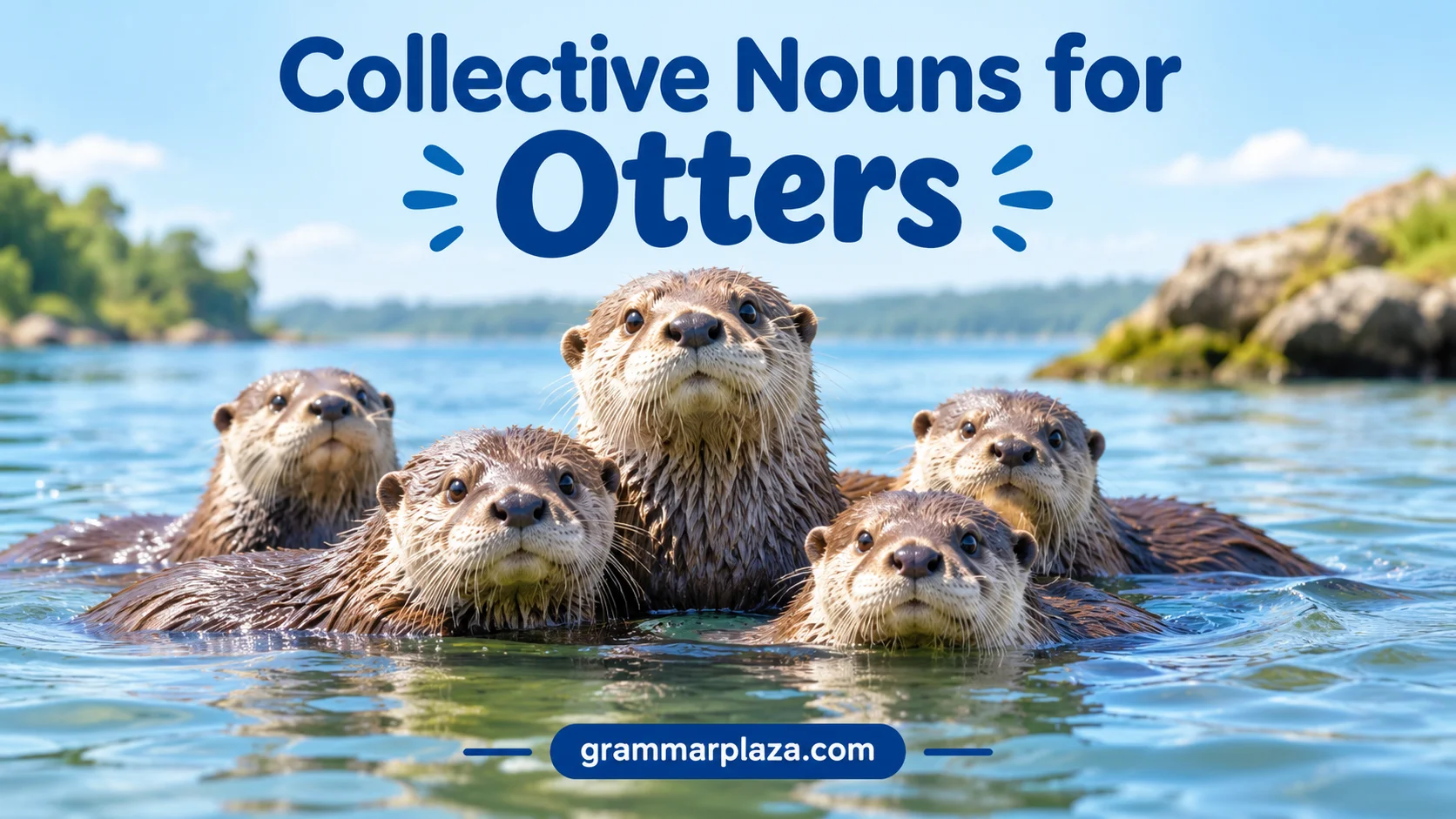
Collective Nouns for Otters make it easier to describe these playful aquatic mammals and their behavior in clear, natural English.
Collective nouns are special words that describe a group of people, animals, or things as a single unit. In writing about a group of otters, using specific collective nouns makes the language more interesting and descriptive. These words can reflect their behavior, appearance, and habits, helping readers imagine how otters live and interact.
The collective nouns for otters include raft and romp. A raft of otters is a recognized expression for otters gathered together, especially when floating on water. A romp suggests a lively group engaged in playful activity. Both terms connect with the social nature of these playful, intelligent aquatic mammals, which may live together or travel together in groups. From my experience with language and editing, choosing the term that fits the scene gives readers a better picture of the animals without making the description complicated.
Collective Nouns for Otters: A Quick Overview
| Collective Noun Type | Simple Example |
| Raft | A raft of otters floated together on the river. |
| Romp | A romp of otters played near the water. |
| Family | A family of otters stayed close together. |
| Bevy | A bevy of otters rested on the shore. |
| Lodge | A lodge of otters lived near the riverbank. |
Common Collective Nouns for Otters With Examples
1. Raft of Otters
A “raft” is one of the most commonly used collective nouns for otters, especially sea otters. It describes a group of otters floating together on water. Sea otters often hold hands while resting to avoid drifting apart, making the term “raft” very suitable.
Example
- A raft of otters floated peacefully in the ocean.
- The raft of otters rested together under the warm sunlight.
- We saw a raft of otters swimming near the coastline.
- A raft of otters held onto each other while sleeping.
- The raft of otters searched for food in the shallow water.
- A raft of otters moved slowly across the lake.
- The researchers observed a raft of otters from a boat.
- A raft of otters played with seaweed near the shore.
- The raft of otters disappeared beneath the waves.
- A raft of otters enjoyed a calm afternoon in the sea.
2. Romp of Otters
A “romp” describes a playful group of otters. Otters are known for their energetic behavior, and this word highlights their fun-loving and active nature.
Example
- A romp of otters played together in the river.
- The romp of otters chased each other through the water.
- We watched a romp of otters having fun near the bank.
- A romp of otters enjoyed swimming and diving together.
- The romp of otters showed their playful personalities.
- A romp of otters moved quickly through the stream.
- The children enjoyed watching a romp of otters at the wildlife park.
- A romp of otters splashed water during their game.
- The romp of otters explored their new surroundings.
- A romp of otters created excitement in the quiet river.
3. Family of Otters
A “family” of otters refers to a group connected by close relationships, usually parents and their young. Otter parents are protective and spend a lot of time caring for their babies.
Example
- A family of otters lived beside the freshwater river.
- The family of otters searched for fish together.
- A family of otters rested inside their safe shelter.
- The family of otters cared for their young pups.
- A family of otters traveled along the riverbank.
- The family of otters played together in the water.
- A family of otters stayed close during cold weather.
- The family of otters found a quiet place to sleep.
- A family of otters enjoyed hunting in the stream.
- The family of otters protected their territory.
4. Bevy of Otters
A “bevy” is a general collective term that can be used for a group of animals. When used for otters, it describes several otters gathered together.
Example
- A bevy of otters gathered near the riverbank.
- The bevy of otters swam across the lake.
- We spotted a bevy of otters during our nature walk.
- A bevy of otters rested after searching for food.
- The bevy of otters moved through the water together.
- A bevy of otters enjoyed the peaceful surroundings.
- The bevy of otters attracted visitors at the sanctuary.
- A bevy of otters played among the rocks.
- The bevy of otters explored the nearby wetlands.
- A bevy of otters gathered during feeding time.
5. Lodge of Otters
A “lodge” refers to a group of otters living together in or around a shared habitat. It connects with the idea of otters having a home or resting place.
Example
- A lodge of otters lived near the forest stream.
- The lodge of otters built a safe resting area.
- A lodge of otters stayed together during winter.
- The lodge of otters searched for food every morning.
- A lodge of otters occupied a quiet river habitat.
- The lodge of otters protected their young members.
- A lodge of otters moved between different waterways.
- The lodge of otters rested after a long day.
- A lodge of otters enjoyed the clean freshwater environment.
- The lodge of otters showed strong social bonds.
Interesting Facts About Otters
Otters are fascinating aquatic mammals known for their intelligence, playful behavior, and strong social connections. Many otter species can live for around 10 to 20 years in the wild, while some may live longer under human care. They have special adaptations that help them survive in water, including dense waterproof fur, strong tails, and webbed feet that allow them to swim efficiently. Sea otters have one of the thickest fur coats in the animal world, helping them stay warm because they do not rely on a thick layer of body fat like many marine animals. Otters are skilled hunters and have varied diets that include fish, crabs, shellfish, frogs, and other small aquatic creatures. Some species use tools, such as rocks, to break open hard shells, showing their impressive problem-solving abilities.
Frequently Asked Questions About Collective Nouns for Otters
1. What is the most common collective noun for otters?
The most common collective noun for otters is “raft,” especially when describing sea otters floating together in water.
2. Why are otters called a raft when they gather together?
Otters are called a raft because they often float closely together on the water, sometimes holding hands while resting.
3. What collective noun describes playful otters?
A “romp” of otters is used to describe a playful and active group of otters.
4. Do otters usually live in groups?
Some otter species are social and live in groups, while others prefer to live alone except during mating or when raising young.
5. Are collective nouns for otters used in everyday English?
Some collective nouns like “raft” are commonly used, while others are more creative terms that add variety and interest to language.
Conclusion
Understanding collective nouns for otters helps us describe these amazing animals in a more colorful and meaningful way. Words like “raft,” “romp,” and “family” reflect different aspects of otter behavior, from their social relationships to their playful movements in water. Learning these terms connects language with the natural world and allows us to better appreciate the intelligence, adaptability, and unique biological features of otters. By exploring both their names and their habits, we gain a deeper respect for these remarkable aquatic mammals.